Today is New Year's Eve. People in cities around the world will soon be gathering outdoors in great masses, talking, partying, and mostly just waiting, watching their watches as the twelve o'clock hour draws near. When eleven fifty-nine arrives, the counting begins. Someone shouts a number over here, another integer is mumbled over there, and soon everybody's joined in the chant. The excitement grows. Three... Two... One... Euphoria! The ball drops, the fireworks explode, the champagne flies, and everybody screams, "Happy New Year!" The crowd temporarily loses itself in swirling clouds of confetti.
When I think of this scene, I can't help but imagine that there must be a person standing still in the midst of it all, a look of bewilderment on his face, questions stirring in his mind. He starts to ask his neighbors, "Did I miss something? Why are we cheering? What just happened?" After a time, he finds someone to answer his questions. When the explanation is given, he pauses, then asks in disbelief, "That's it? You mean, just that little nine now where the eight used to be? That's the only thing that's changed? Why ever did I come all the way out here for this?"
I confess, I've long thought this holiday was a tad odd. I mean, I realize it's the beginning of another year. But so what? When the sun dawns on January 1, 2009; December 31 will still only have been a day ago. The fact that January 1, 2009, is the start of a new year is true only in the sense that it will have been a year since January 1, 2008. And, in that sense, isn't every day a new year's day? December 31, 2008, marks the beginning of a new year since December 31, 2007. So oughtn't I be celebrating already? The only difference about January 1 is that we've all agreed that this should be the date when we start using the next number in our yearly sequence. What the parties really must boil down to, then, is a celebration of our ability to count.
"Music," wrote nineteenth century poet Henry Wadsworth Longfellow, "is the universal language of mankind." This is a striking statement—and I fear the claims of poets are always best served cum grano salis to allow for gentle seasoning and healthy skepticism. Music is not language. Nor is music universal. It may be made by people everywhere, but the styles, contexts, interpretations and meanings can vary tremendously between cultures. Throughout this diversity, however, music remains an intensely communicative medium. It stirs our emotions, colors our stories, and even defines our identities. It isn't language, but still, it does speak to us in its way. How does music communicate? Why is music different from language? By examining one against the other, we might learn a little about each.
It's easy to demonstrate what separates the language and music. To start, music is not language, because children don't grow up learning music to tell their parents "I'm hungry" or to ask "Are we their yet?" Music is not language, because although one could write a score for The Tempest, no musical arrangement alone could reveal the story. A composer might write a piece inspired by Shakespeare's words, but no listener would ever hear it and think, "We are such stuff as dreams are made on; and our little life is rounded with a sleep." Fundamentally, music is not language because it lacks language's precise symbolism: its words. In English, for instance, if someone wants to talk about a dog, he can simply say the word "dog," and be done with it—even though there is no real connection between word and beast but for the symbolic association people have created. It's true in any language: dog, canis, chien, perro, hund, собака, كلب, कुत्ता, 狗, 犬; ten different languages, ten different words, none of them anything like the animal we call a dog, but all of them carrying exactly that meaning. There is no word, however—no note, chord, rhythm, or melody—that means dog in music. Music is not a language.
Music relies on different mechanisms to carry meaning. Instead of communicating by abstract symbolism, music evokes meaning through emotion and resemblance. The latter of these, meaning through resemblance, might also be called meaning by mimicry. So it is that although there is no specific musical symbol to denote "dog," a skillful composer could still use music to imitate a dog's barking, growling, scratching, and howling, and thereby convey meaning by reminding listeners of the things they associate with the animal. Antonio Vivaldi famously employed this method in The Four Seasons, imitating birdsongs, raindrops, and thunderstorms to indicate different times of year. Of course, meaning by mimicry is more complex than simply imitating the sounds a thing makes. Bon Iver's For Emma, Forever Ago, as an example, reminds listeners by its sparse instrumentation that it was recorded in the isolation of a northern Wisconsin cabin during winter. Inventive composers can communicate myriad ideas by trying to find a way to employ pitch, rhythm, and instrumentation to evoke our thoughts on a particular subject.
A century ago, the city of Appleton, Wisconsin, celebrated Christmas on a grand scale. It was 1908, and for the first time, the city had decorated its streets with electric lights for the holiday. The occasion was not unlike our observance of Christmas today: bright, extravagant, and unrelentingly commercial. Summing up the event on December 31, the Appleton Post boasted that "The illumination of College Avenue by the Appleton merchants, together with the notoriety given to the town by the possession of the biggest Christmas tree in the world, and not only the biggest, but the prettiest, put the merchants of nearby towns to their wits' end to keep their trade from drifting over to Appleton."1
Christmas in Wisconsin wasn't always such a colossal affair. Indeed, the holiday hasn't always been celebrated here. The American Indians who first occupied the land had their own traditions, beliefs, and ceremonies. The first people who celebrated Christmas in what became Wisconsin were French and British traders who arrived after the seventeenth century. Few of these first Christian arrivals were especially devout. "We sometimes kept Sundays; but whether on the right day was doubtful," recalled Thomas Gummersall Anderson, a British trader who traveled Wisconsin widely in the early 1800s.2 Despite their relaxed attitude towards religion, Anderson and others like him tried to retain their Christmas traditions as best as they could in an unfamiliar land. Anderson's memoir, written just a few years before his death in 1875, records two Christmas feasts gone terribly awry on the Wisconsin frontier.
There is something unavoidably alluring to me about the cold. I don't know what it is. For some reason, though, I've just always been more apt to build a snow fort than a sand castle. The heat makes my spirit melt, I have the soul of a wax man, but the cold is different. I find it at once refreshing, piercing, unbearable, intense, and thrilling. I sport with the cold. With almost masochistic pleasure, I subject my toes and fingers to its sting and brave its challenge, giddy to survive its might. Cold is power! It is the power to invigorate or to destroy, the power to transform the world into something alien and uninhabitable, but something still simultaneously beautiful. I cannot help but be transfixed.
I awoke this morning to the sound of the wind beating against my bedroom wall. The weatherman had said yesterday that it could start gusting up to twenty-five miles an hour. My bed was cold, and the blankets wrapped around me felt papery thin. When the fog of sleep finally cleared from my eyes I could see three foot snowdrifts outside my window. It was the kind of morning that would make anybody want to stay in bed. Anybody, that is, except for people like me. Enlightened or deranged, I decided to go hiking.
No matter that the wind was so fierce, the snow so deep, or the temperature so cold — the thermometer in my kitchen window read ten degrees below zero, Fahrenheit — I wanted to celebrate the winter solstice by heading straight out into Wisconsin's deep December freeze. So, I quickly donned my winter gear and stepped outside into the snow. Now my adventure could begin, and I made to awe myself with winter's power and beauty for as long as I could stand it.
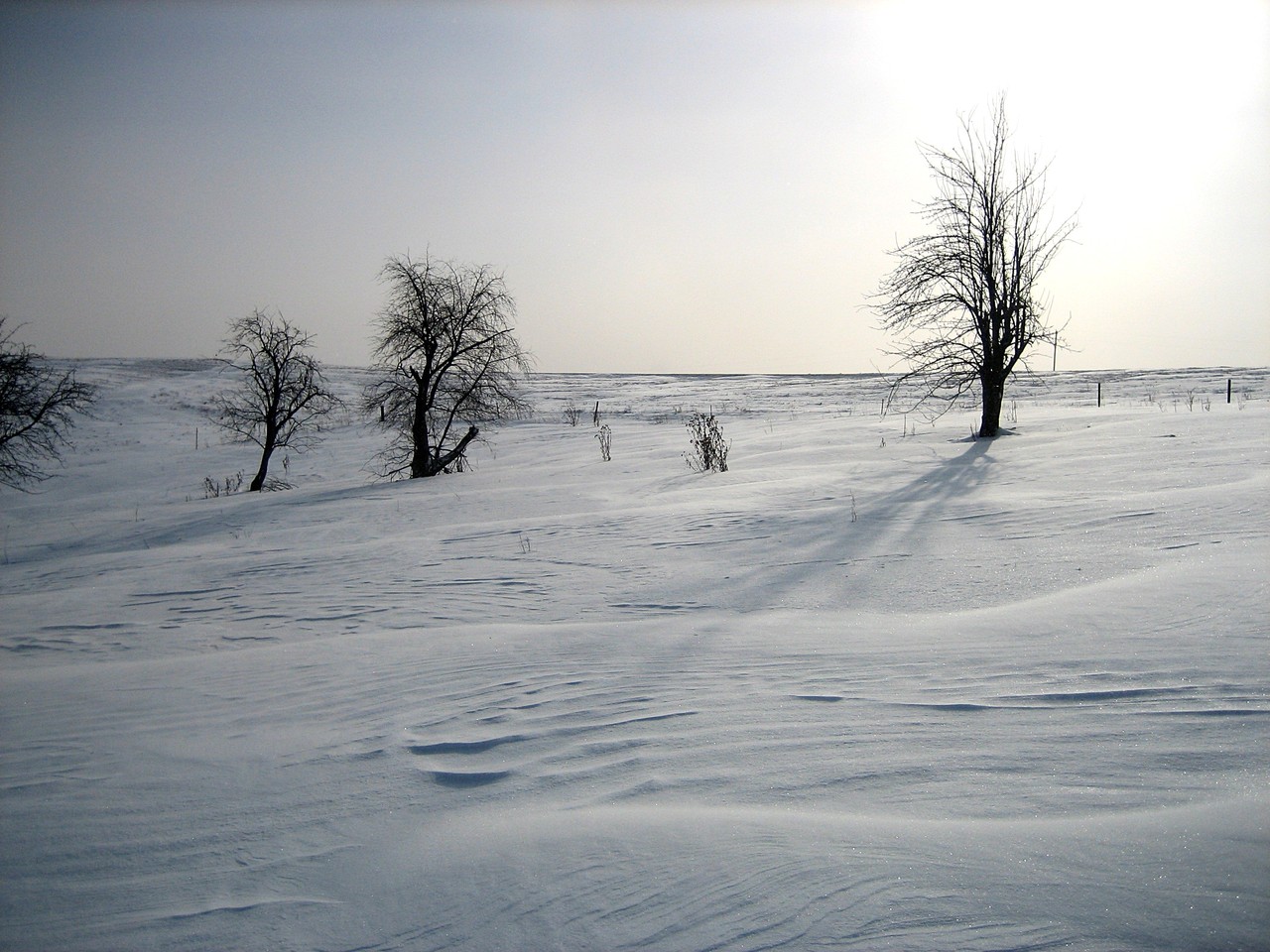
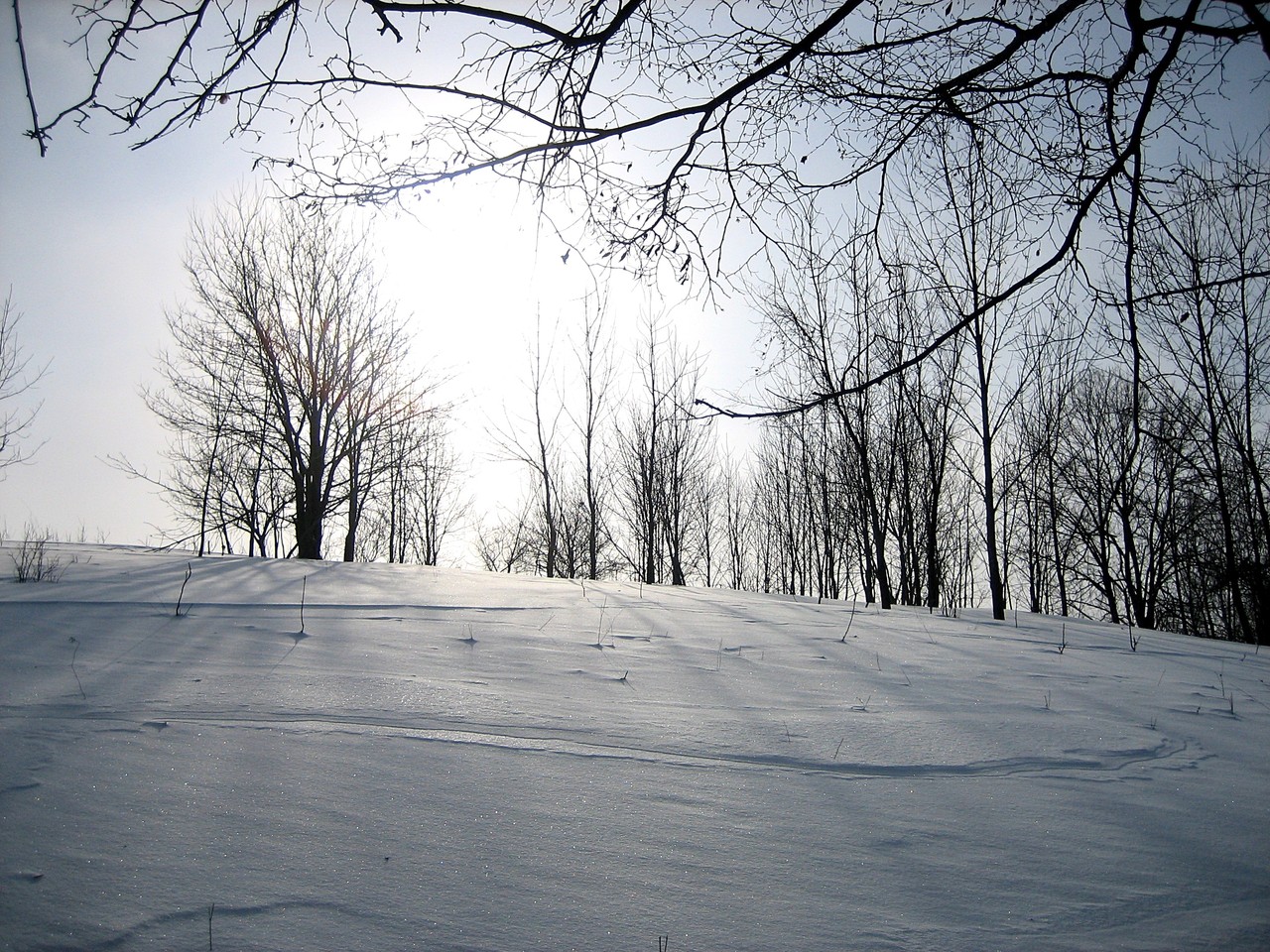
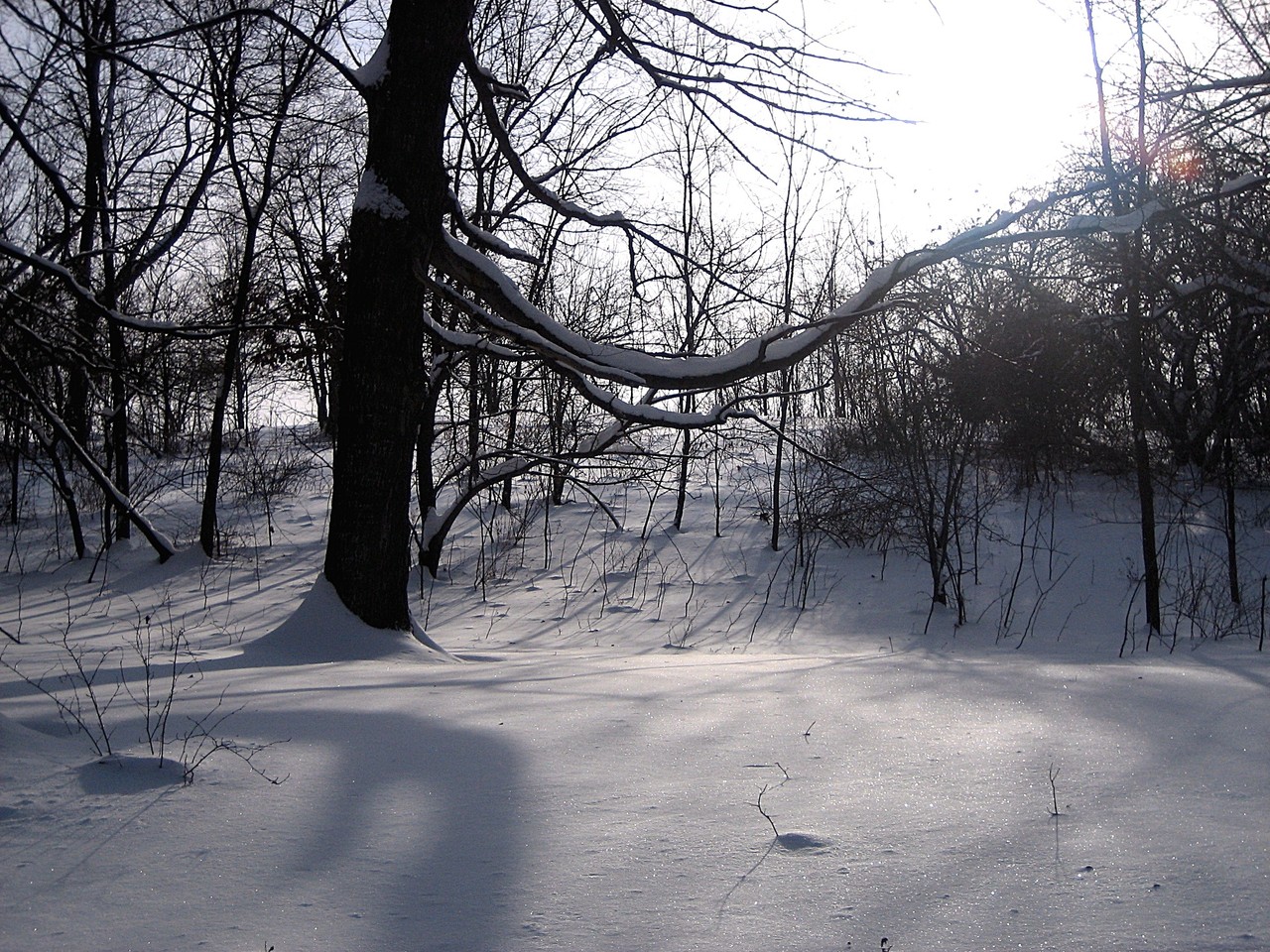
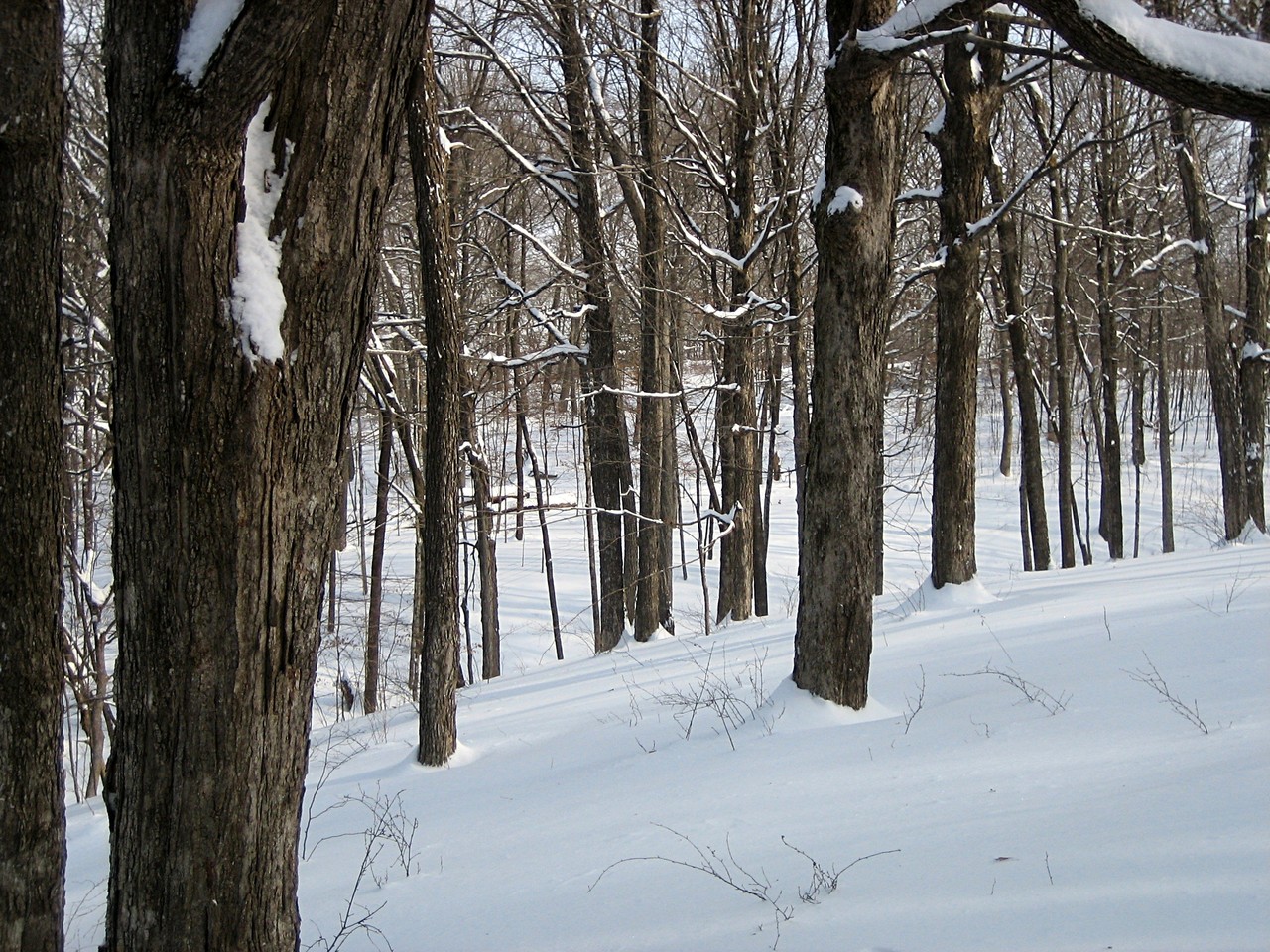
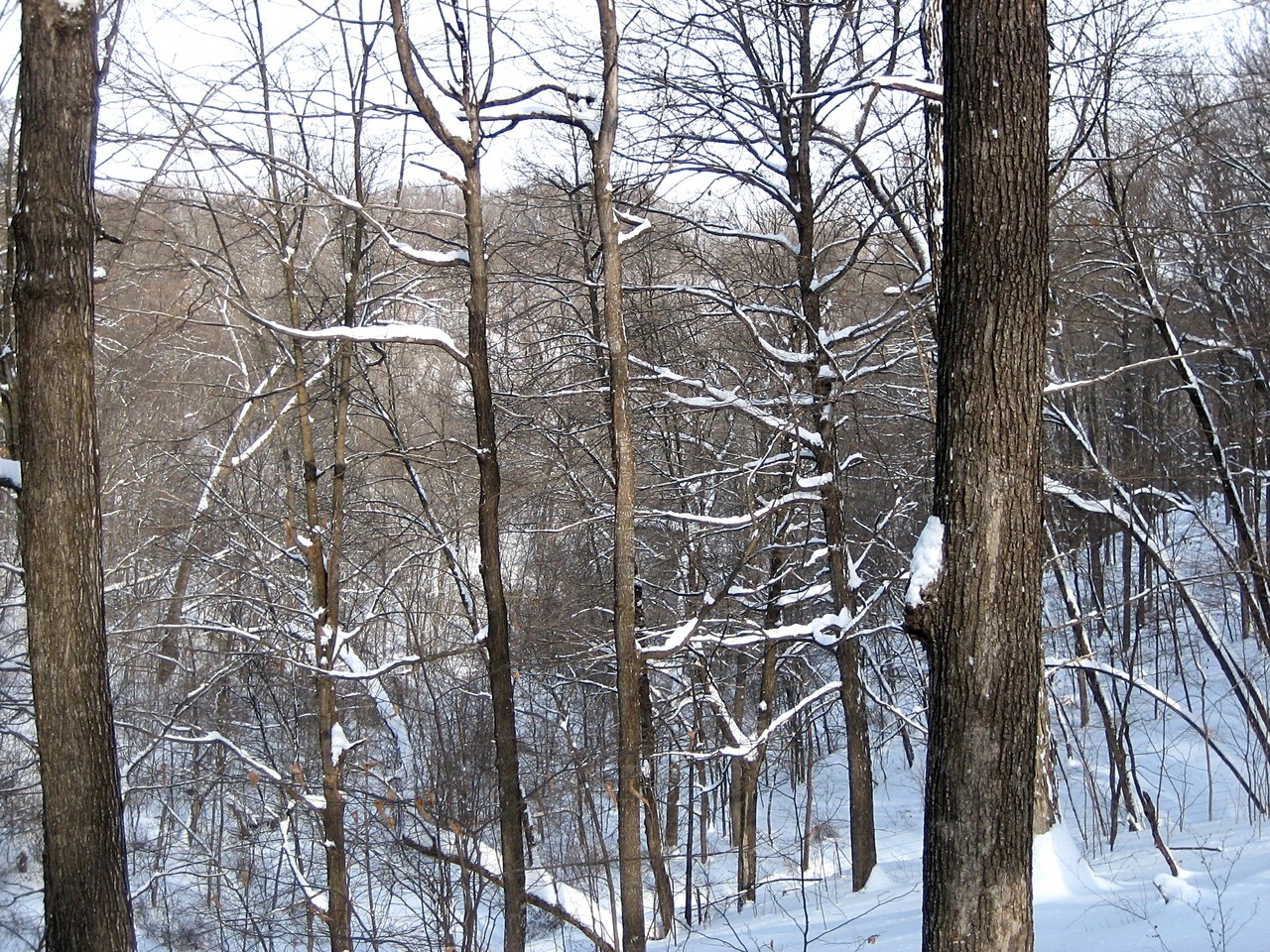
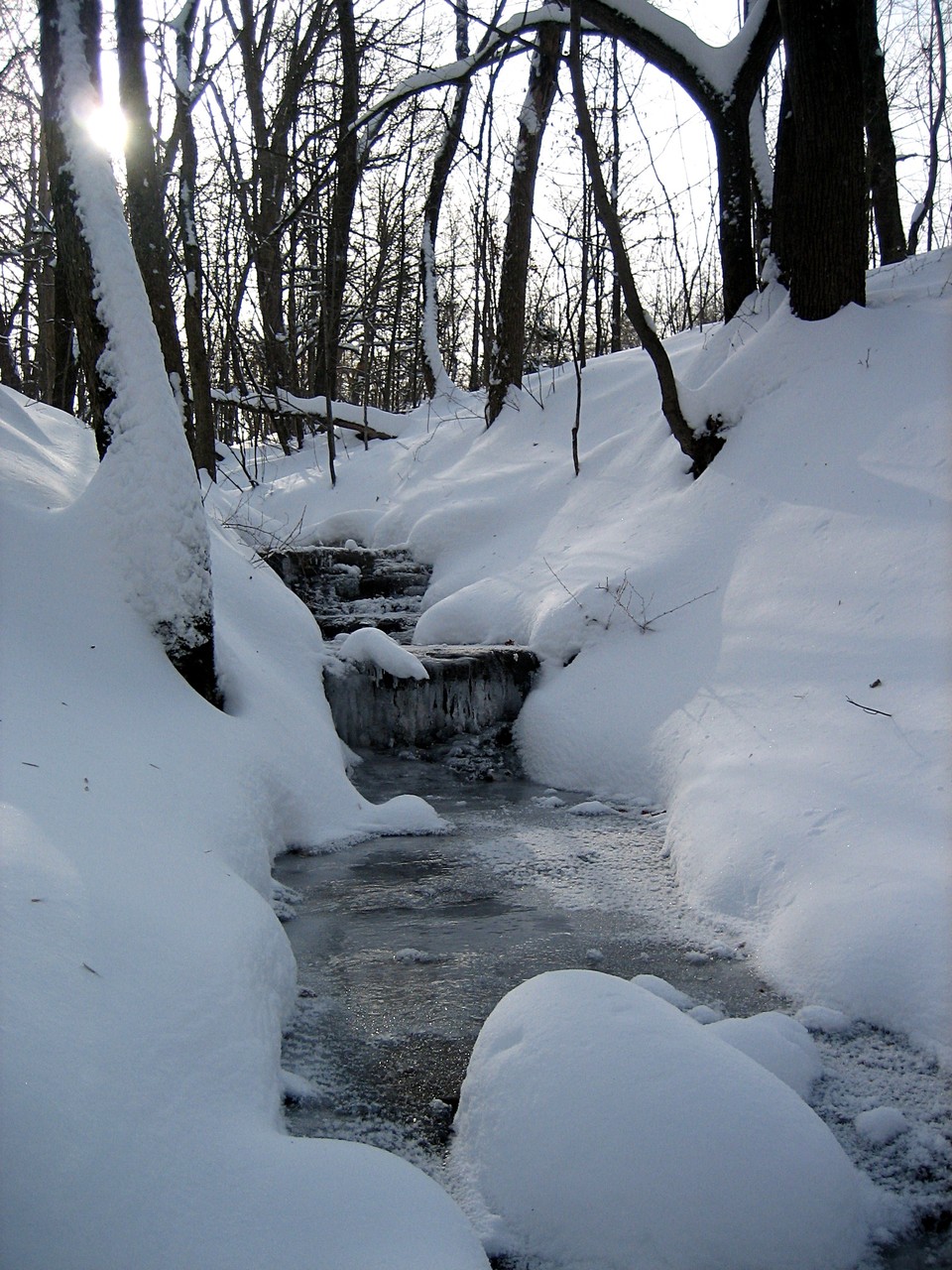
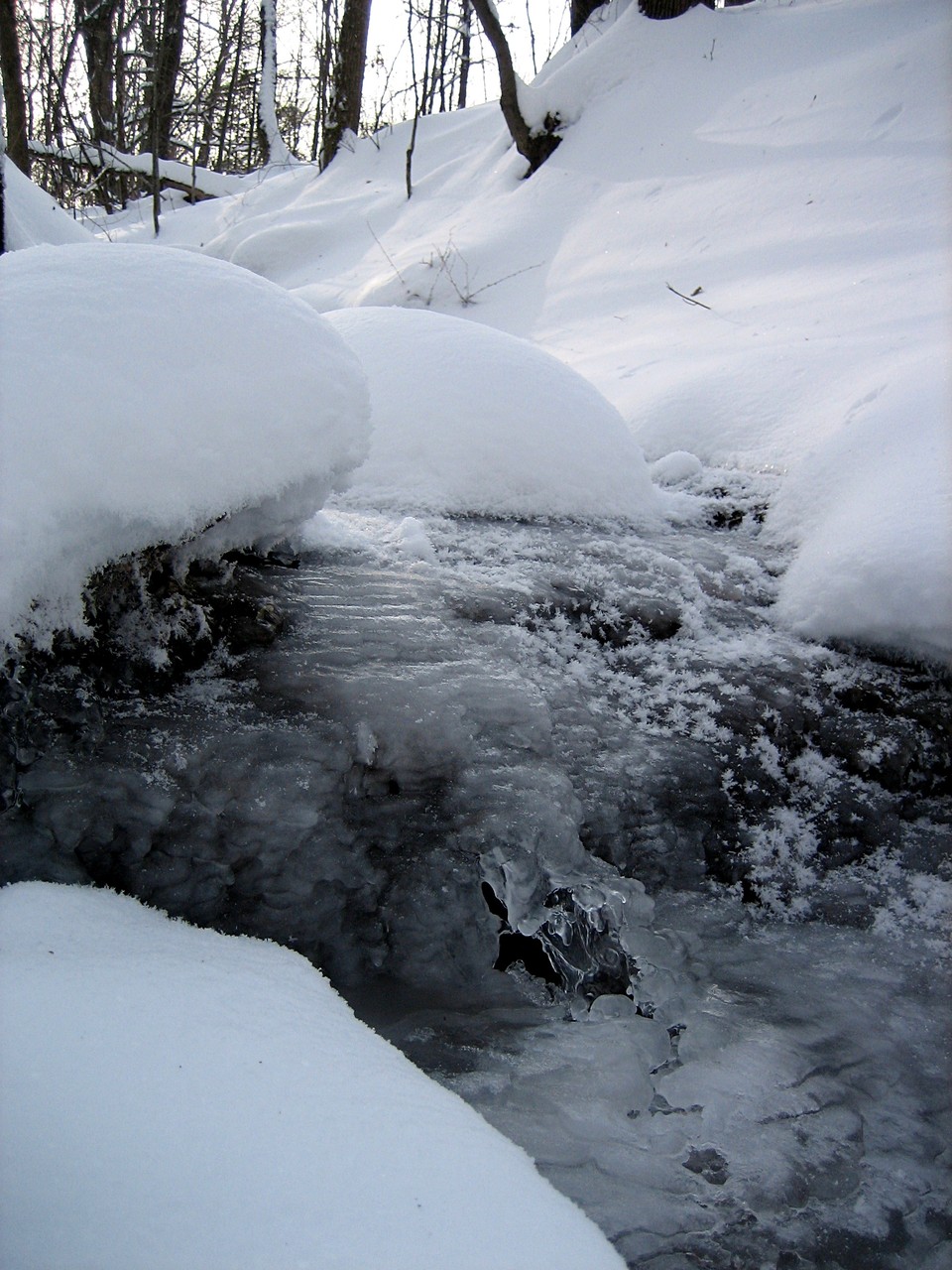
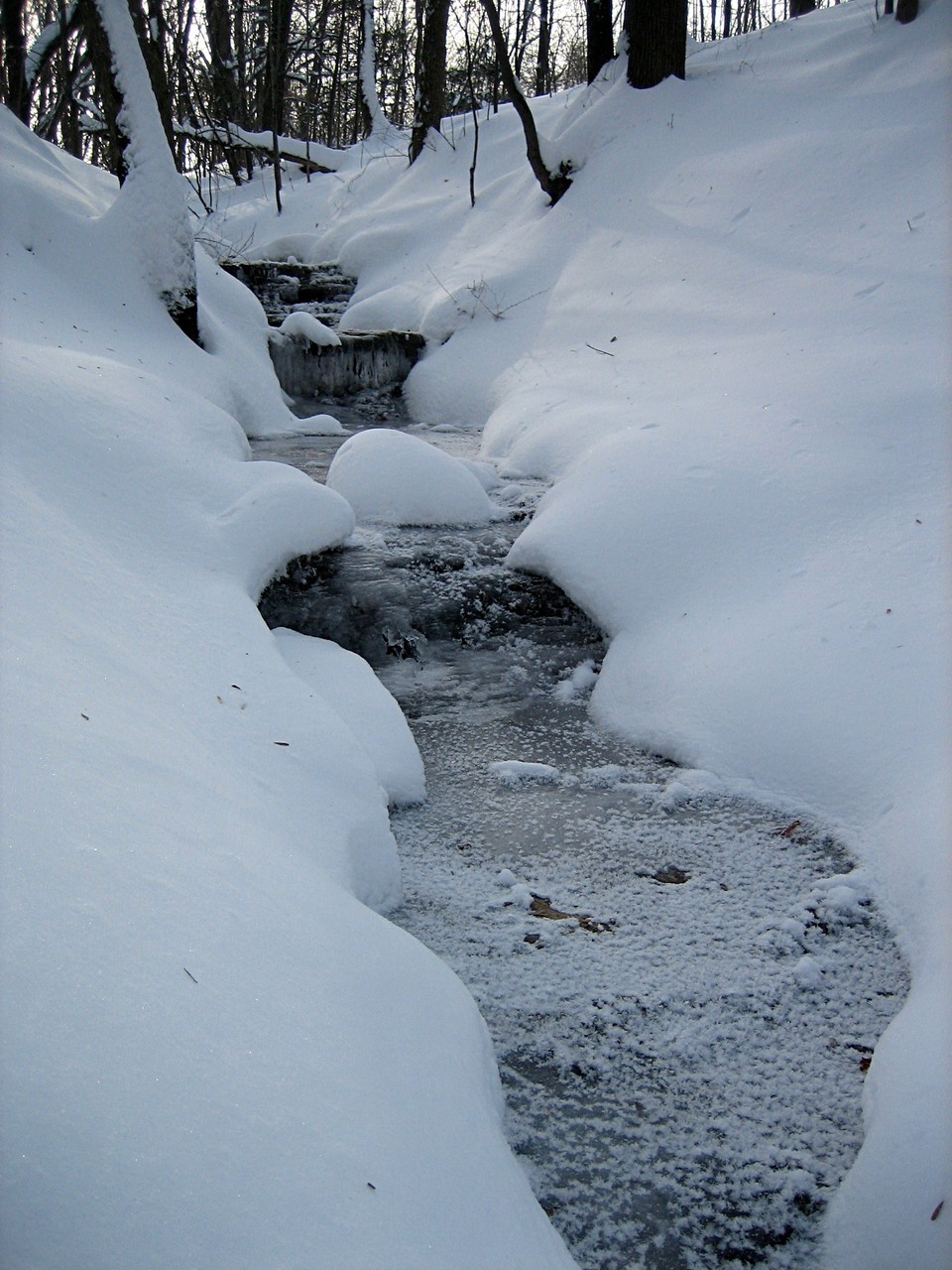
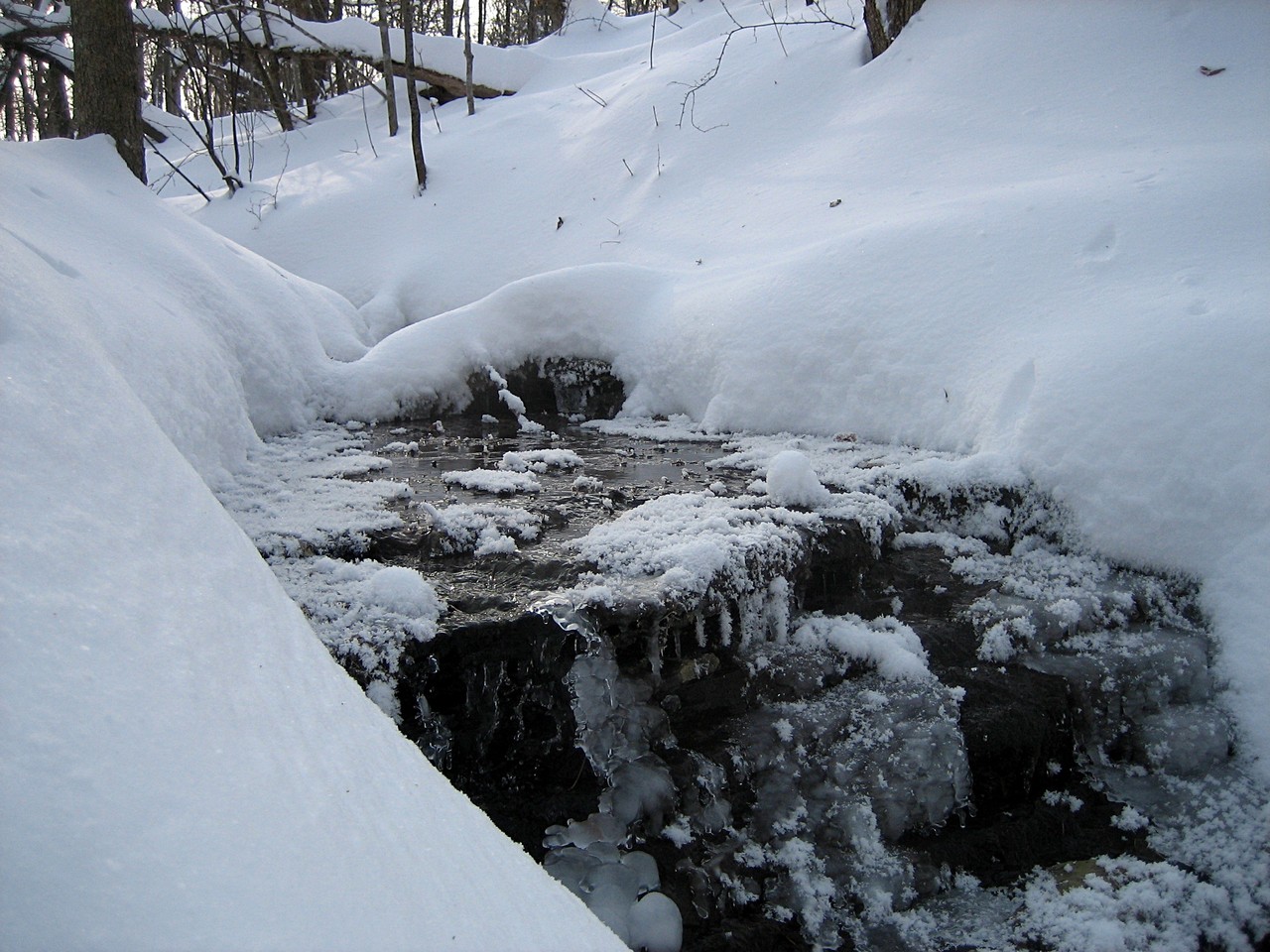
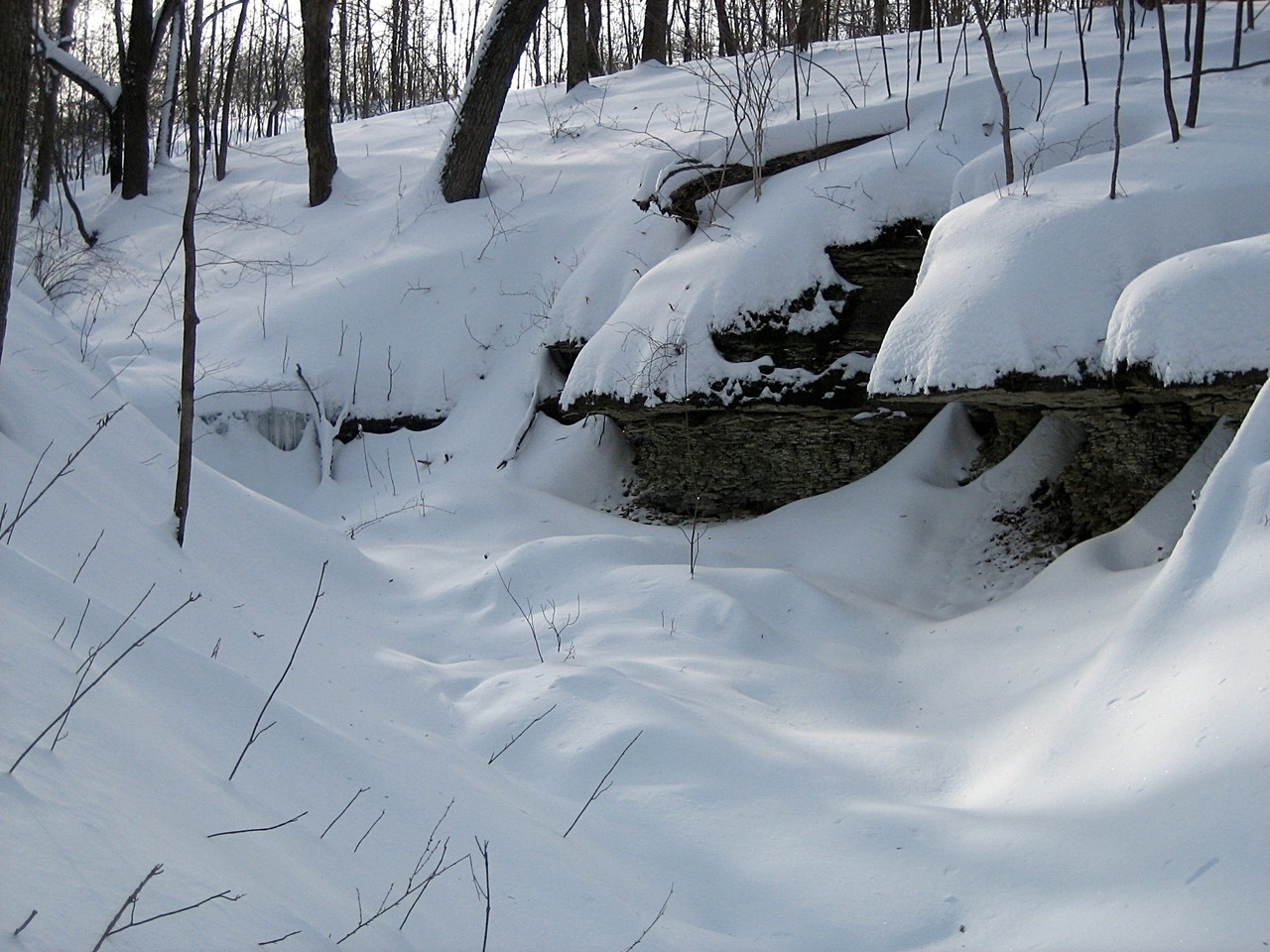
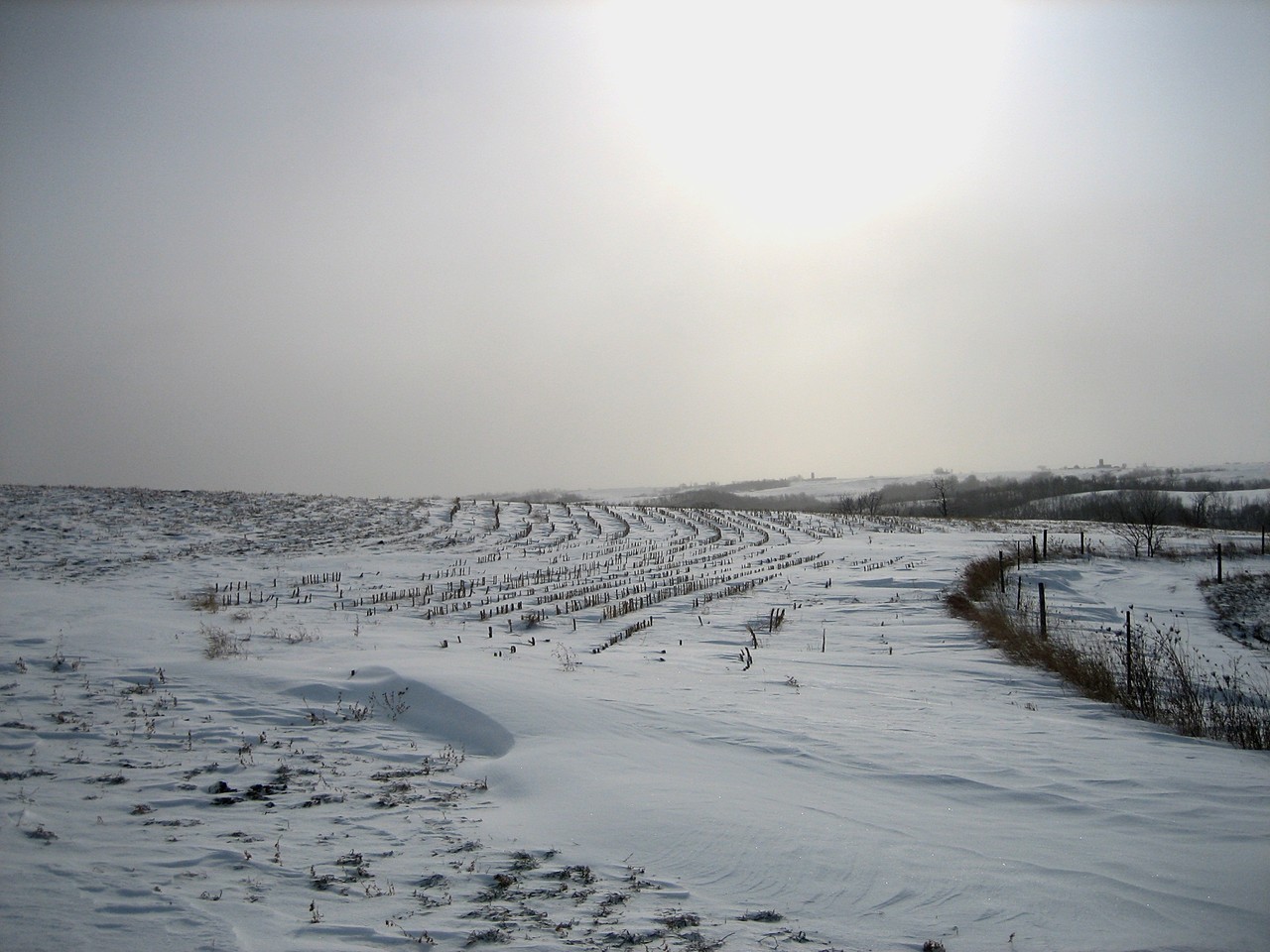
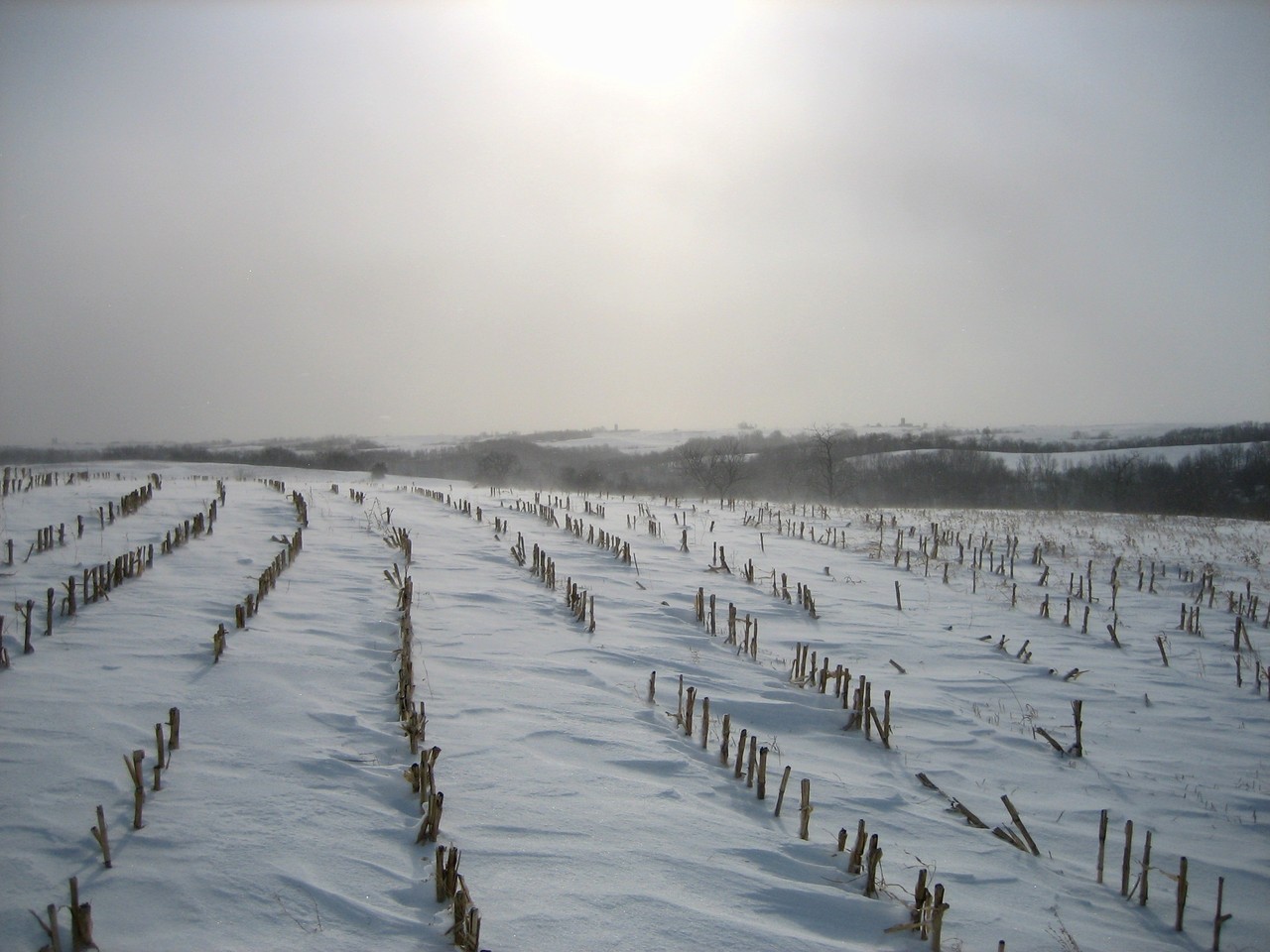
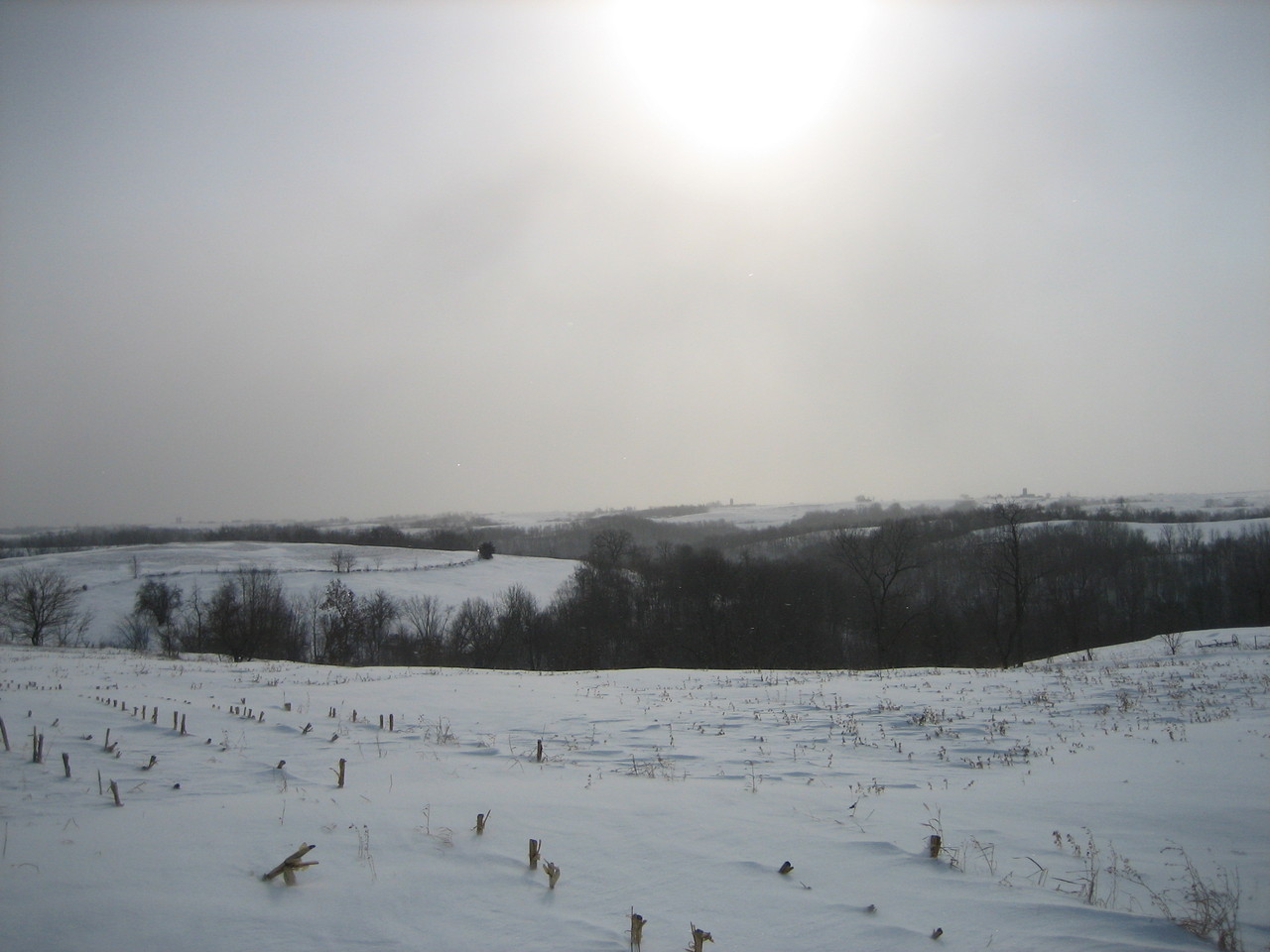
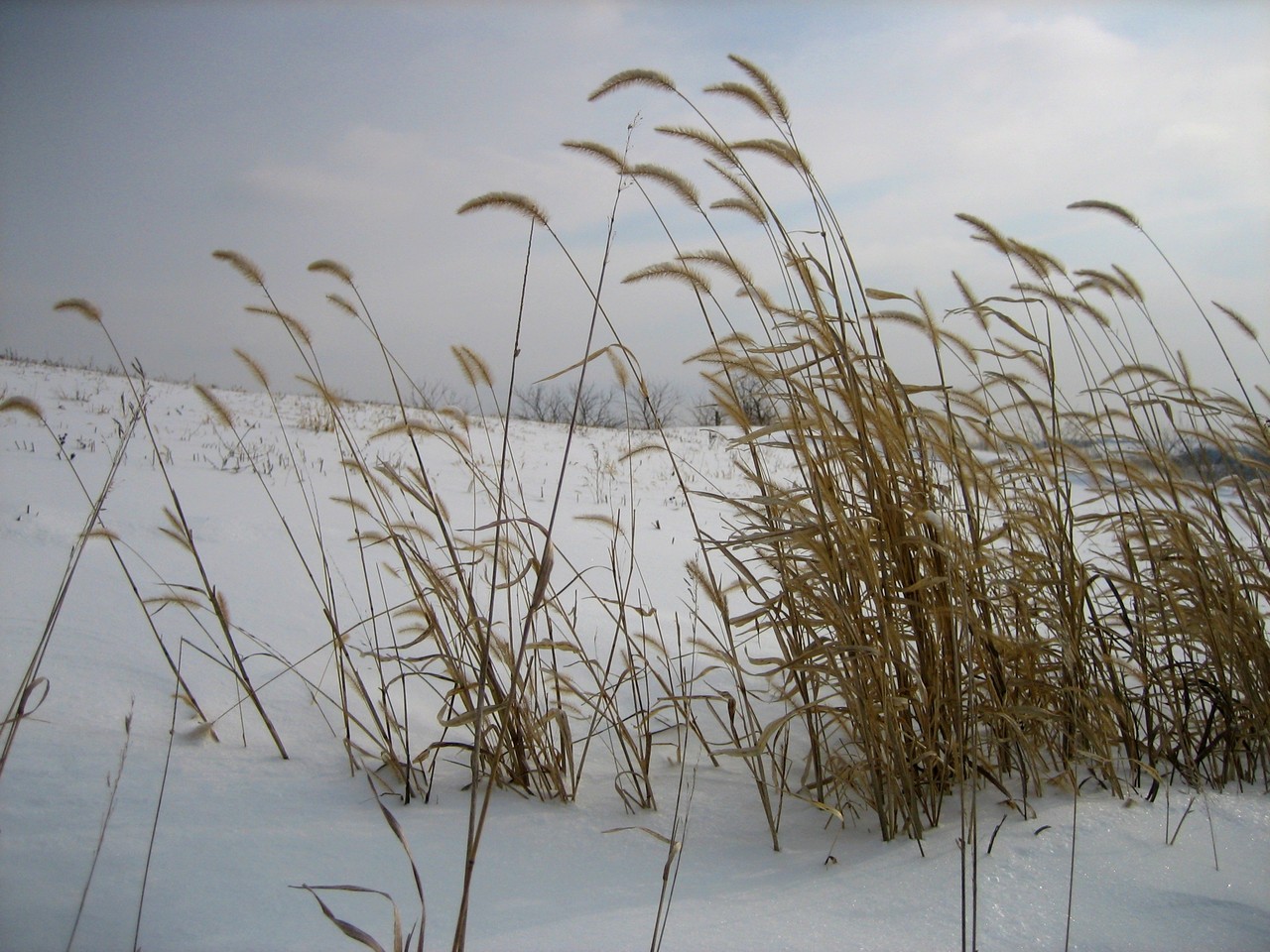
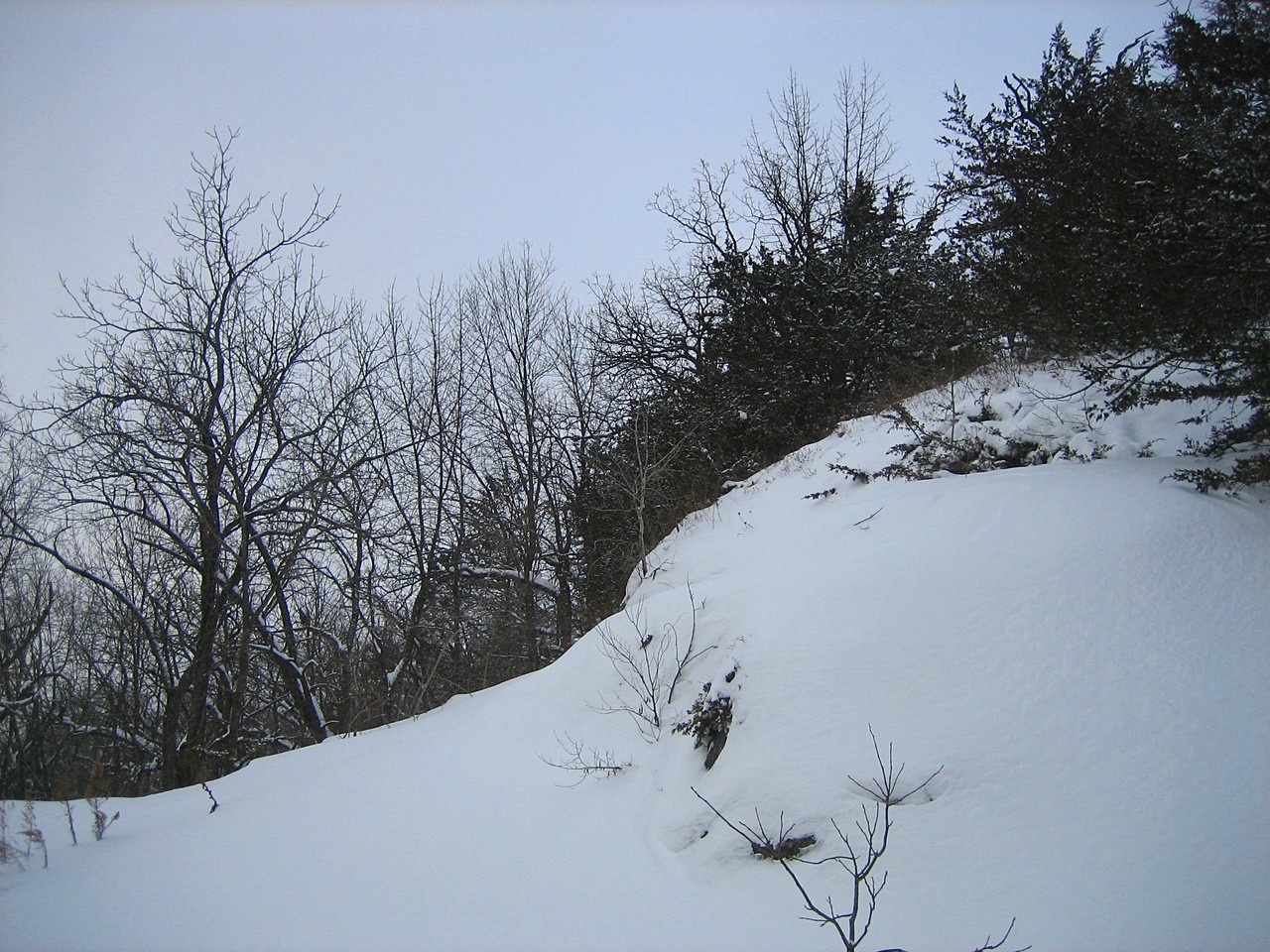
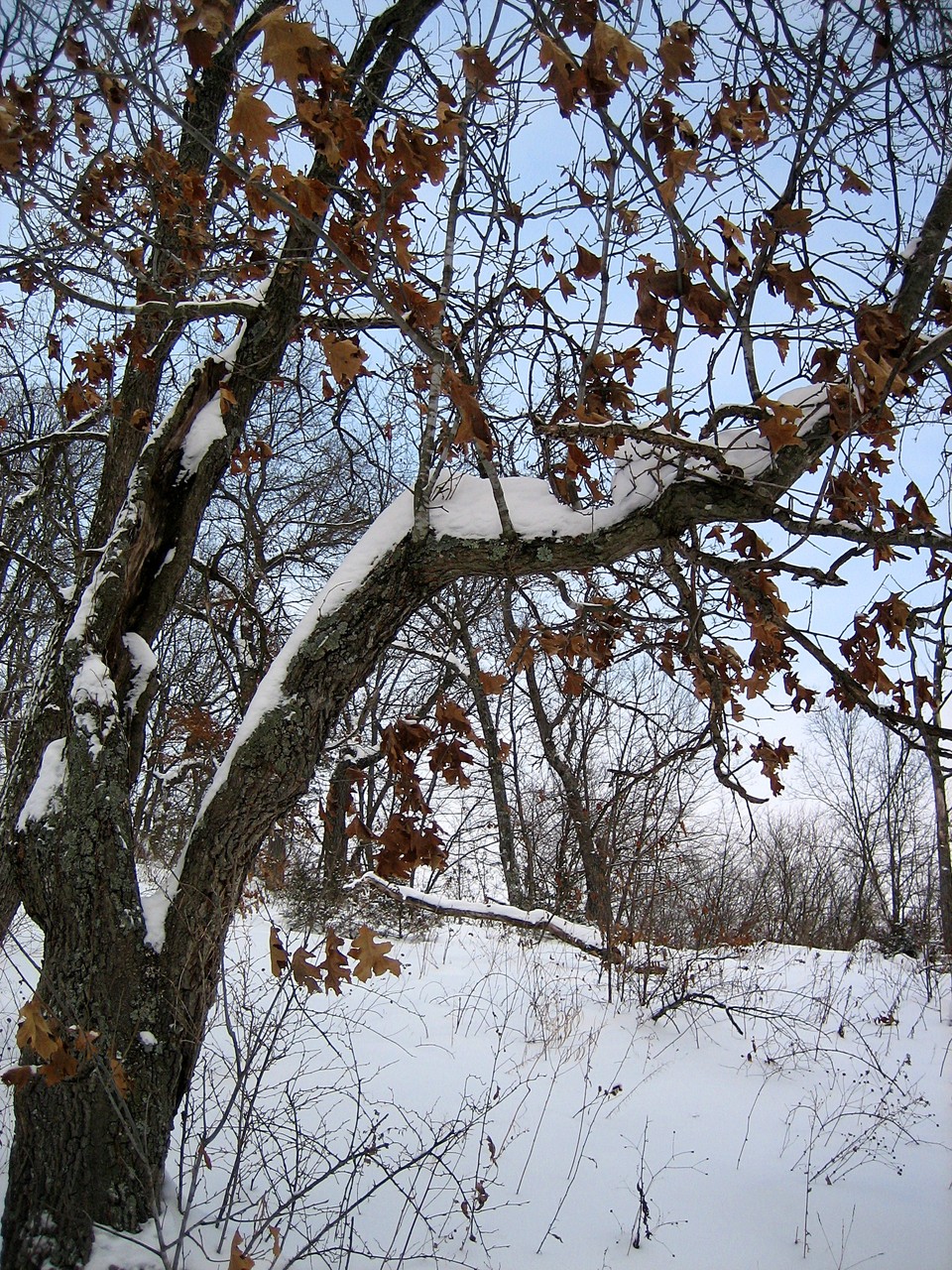
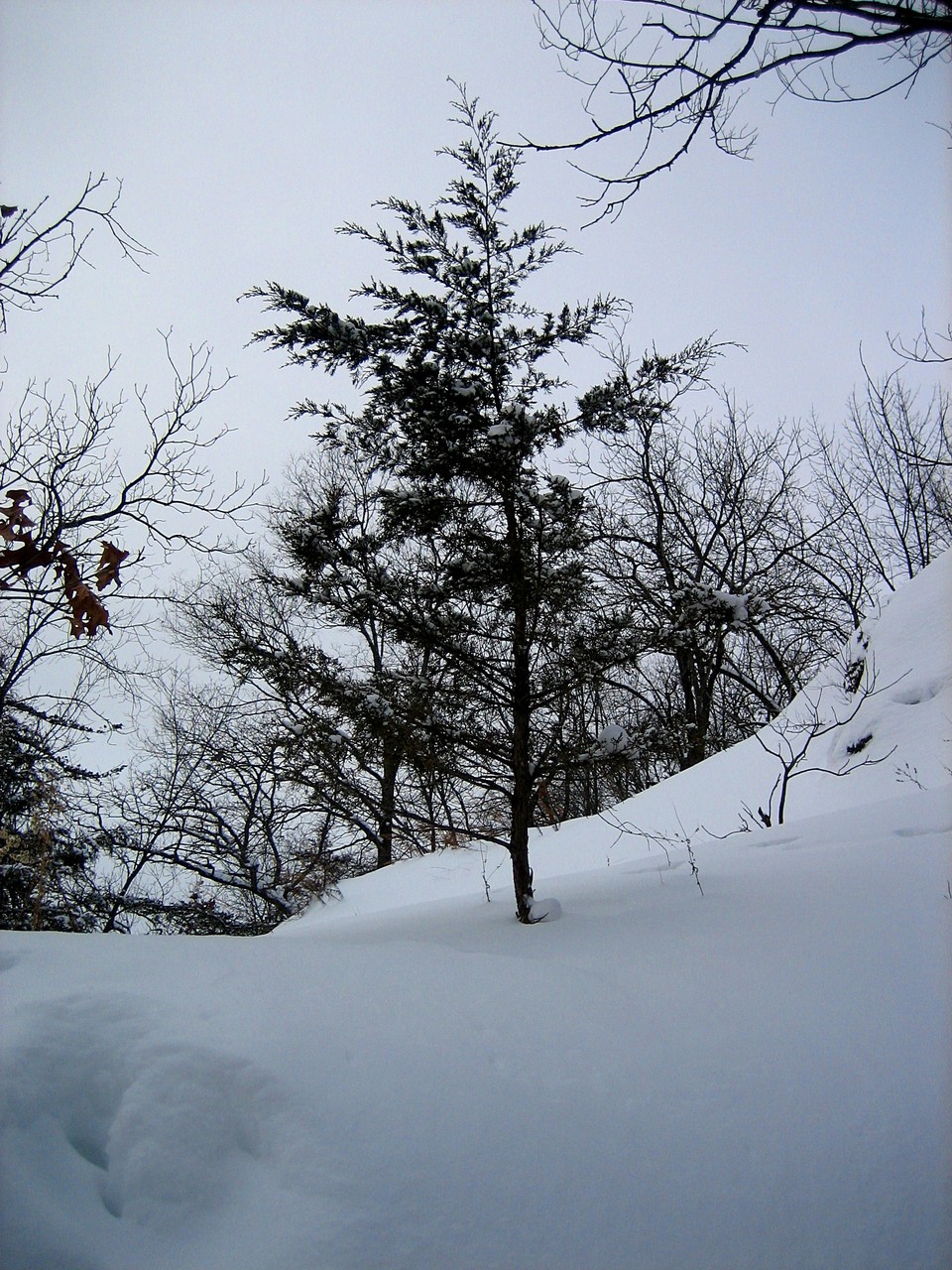
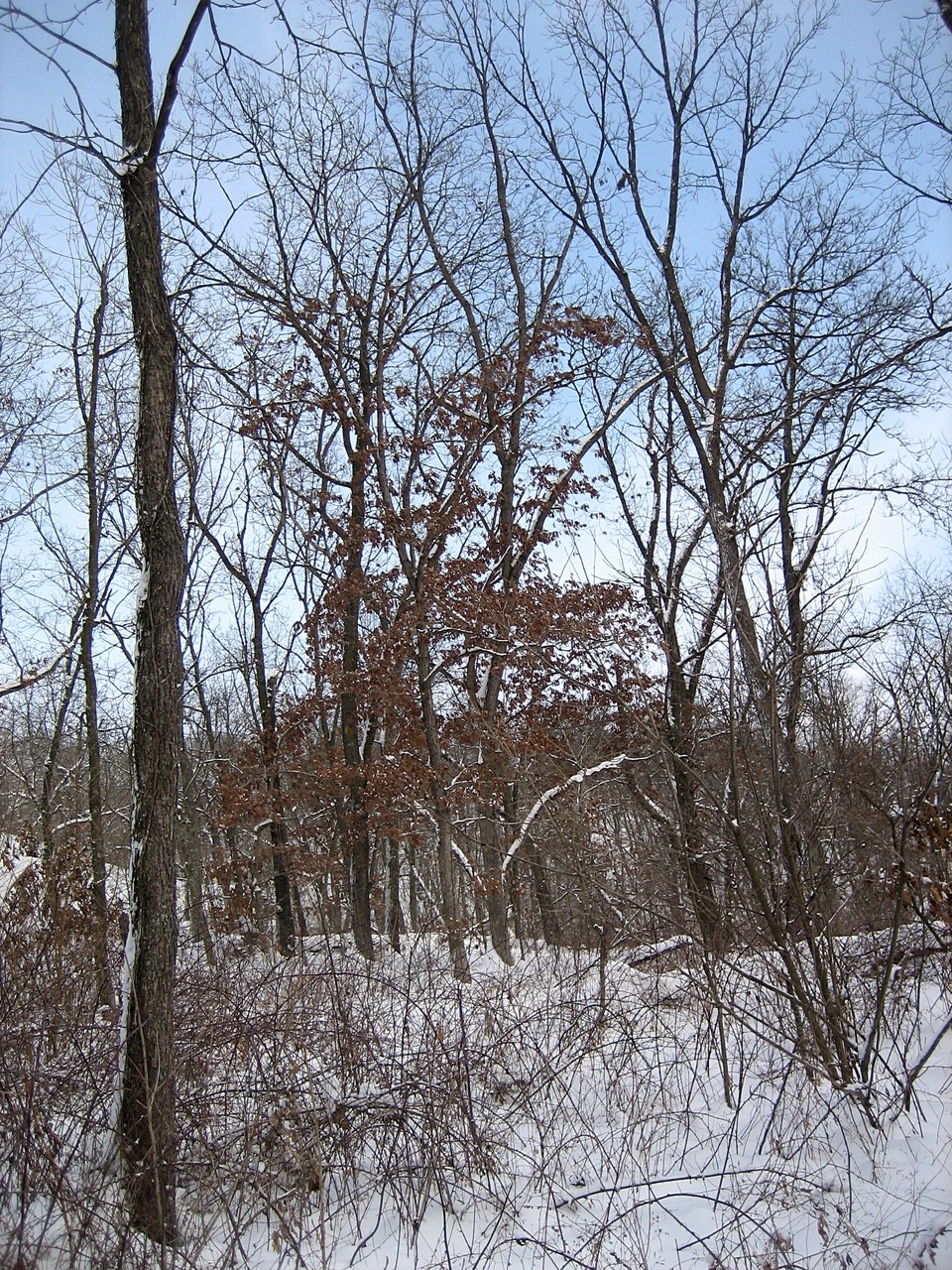
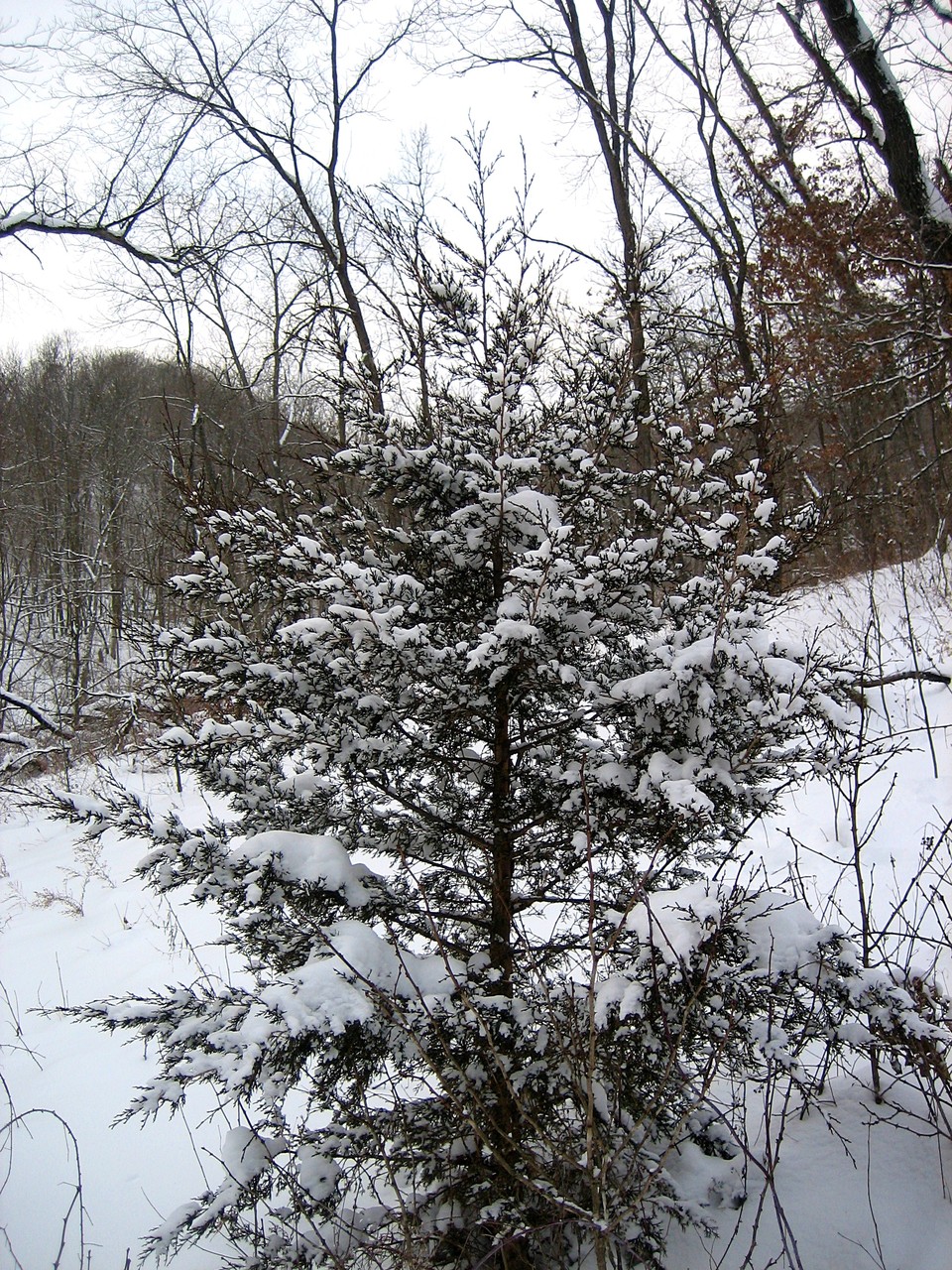
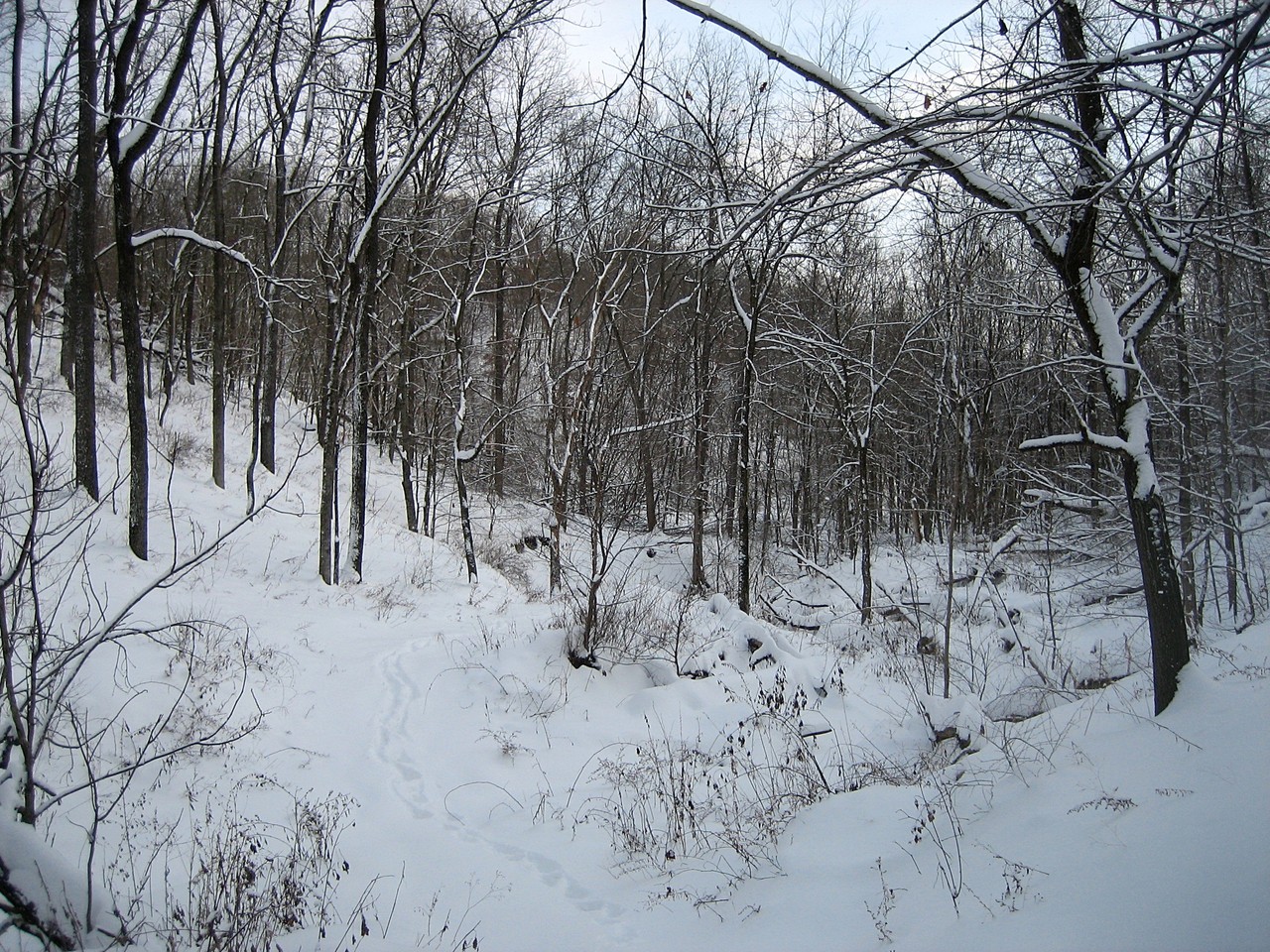
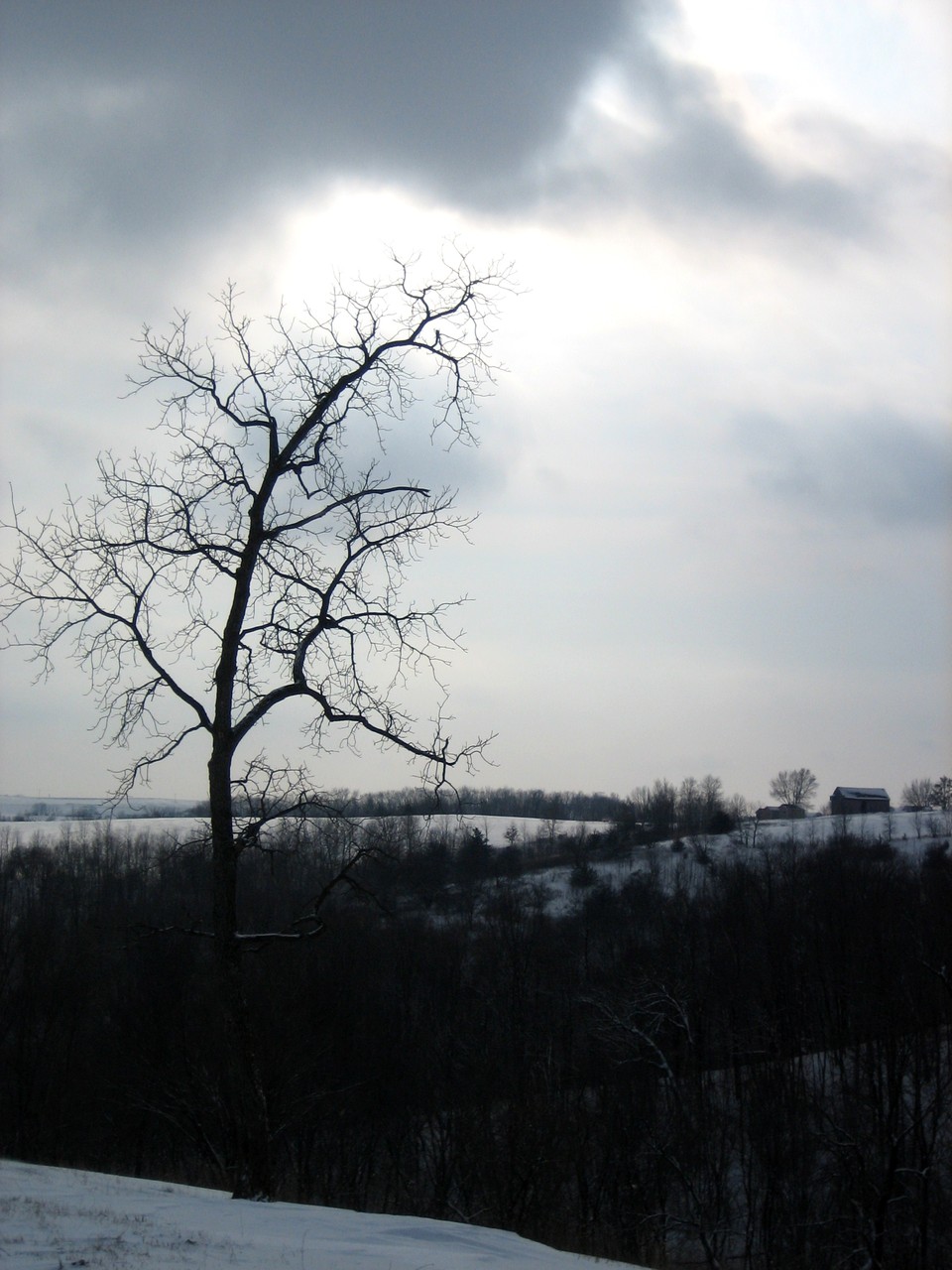
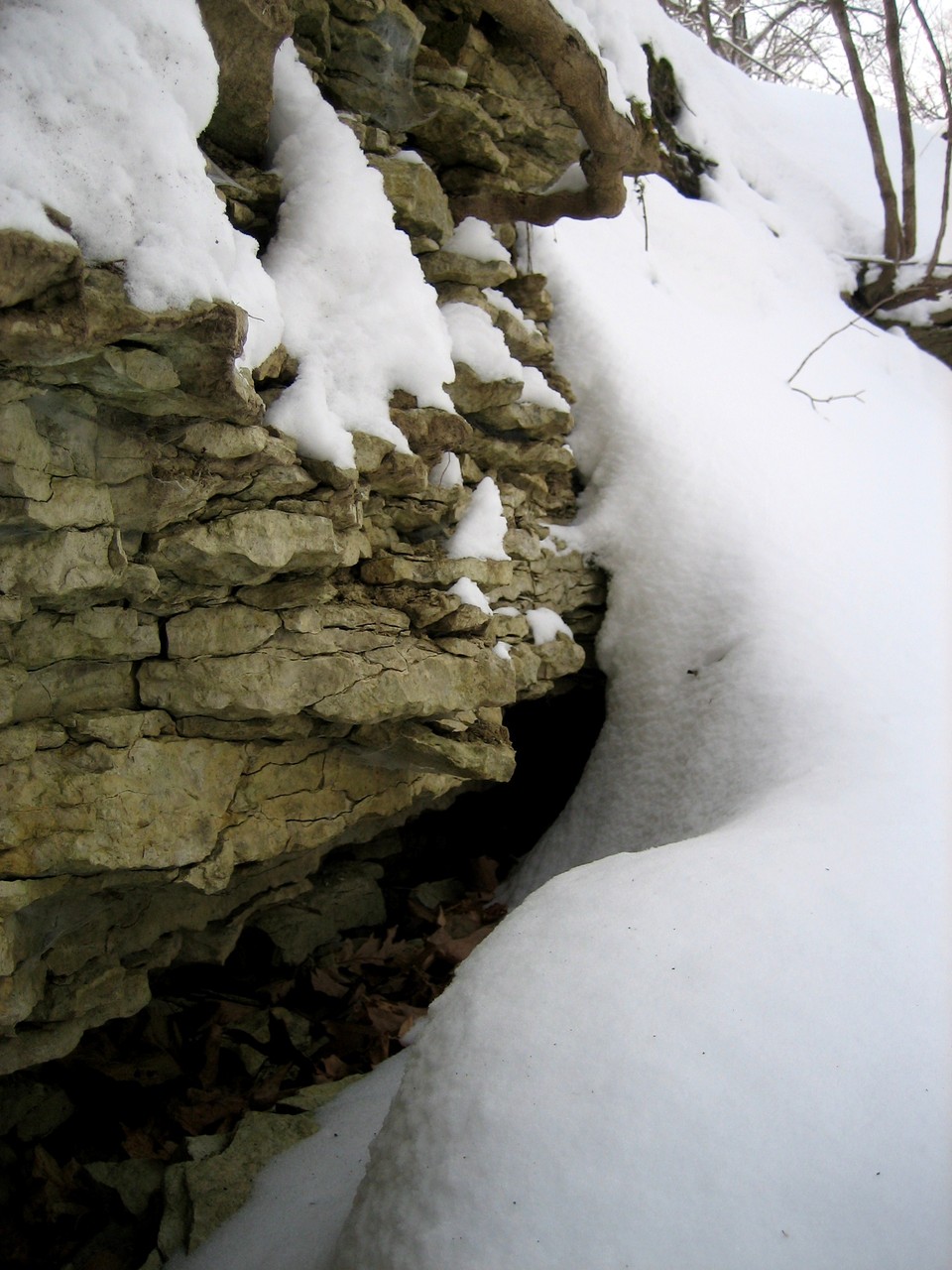
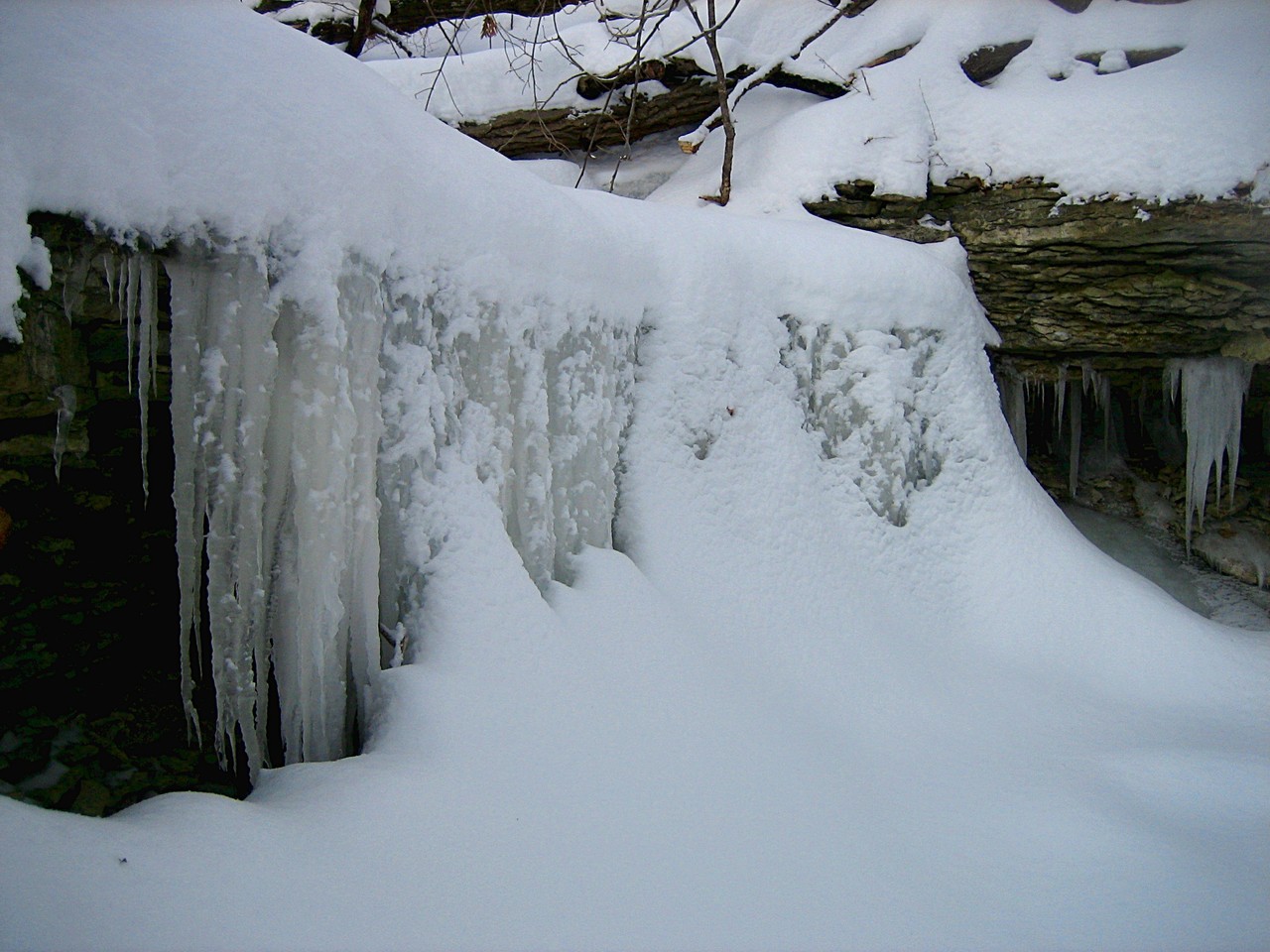
It's amazing how much bigger the world seems when the snow and wind impede every step between one place and another. Though I stayed outside for more than an hour, I only managed to trudge over a few of the hills and valleys that make up my family's farm. Still, I discovered some lovely things. In the wooded glen, sheltered from the wind, a defiantly unfrozen stream still flowed gently between the snowbanks. On the barren ridgetop above, the wind whipped enough snow into the air to stain the blue sky gray, and the sun struggled to illuminate the bleak, frozen world spread out beneath it. Luckily, I found that I could still use a camera while wearing gloves, and the few scenes that I captured with my numb fingers will finish this story far more effectively than my amateur prose.
I'll be back with another post before Christmas.
It seems that over a month has elapsed since my last meager update. I've had plenty else to do, but there can be no excuse for such a vast temporal chasm — especially not here in the high-flying virtual amusement park we call the World Wide Web. It's an odd thing, really. A delay of a few seconds in loading a web site makes people cringe, and the sites that go without an update for more than a few weeks are usually forgotten. Offline, though, we subscribe eagerly to our monthly magazines and trod patiently through the week waiting for our favorite sitcom every Thursday night. The pace of the Internet, by comparison, is breathtaking. I fear Acceity has lately been left behind.
Of course, this was never meant to be an hourly or even daily blog. Plenty of sites already specialize in continuously pumping content into a trough for mass-consumption. We all put up with it, myself included, and we can't seem to help pressing our mouths to the RSS-feeder and slurping up thirty second YouTube videos and rehashed AP stories, worthless top ten lists and mundane Flash games. Our brains are fed with dog food.
I mean for Acceity to be place aside from all that, a quiet stop along the Internet's equivalent of a winding country lane. Though perhaps this can't be a web journal where every posting is lovingly hand-crafted by a team of expert wordsmiths, I do hope that it can be a smart, thought-provoking, and refreshing place for you to stop and ponder. The pace should be slower here. Still, I realize that my visitors will need something to ponder about. That's why the delay since the last update was so inexcusable. Now, though, with the holiday break providing ample time to think, I'm certain that I can post a little more often. In fact, I'll make a promise: there will be updates twice a week from now until the end of January. It's up to you to keep me to my word.
Best wishes until next time.